
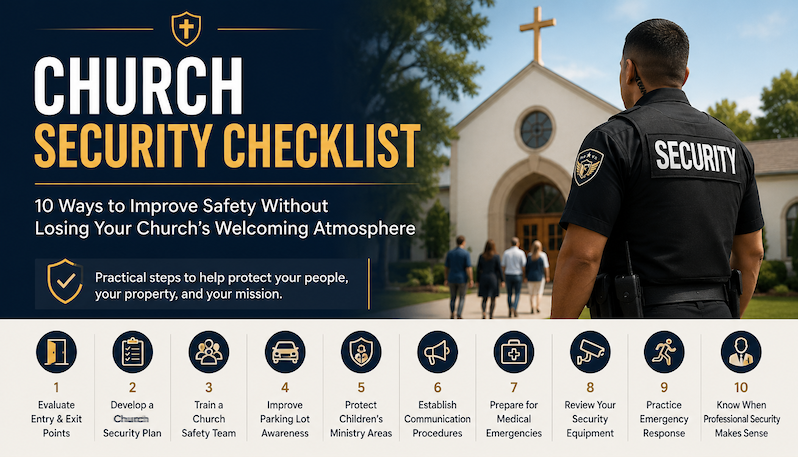
Churches are meant to be places of peace, fellowship, and worship. Creating a safer environment doesn’t mean making people feel uncomfortable or turning your church into a fortress. In most cases, effective church security is built through thoughtful planning, trained people, and simple procedures that help everyone feel both welcomed and protected.
Whether your church has 100 members or several thousand, reviewing your safety practices is one of the best investments you can make for your congregation.
1. Evaluate Entry and Exit Points
Know who can enter your building and when. Consider:
- Main entrances
- Children’s ministry entrances
- Emergency exits
- Parking lot access
The goal isn’t restricting visitors, it’s understanding how people move through your campus.
2. Develop a Church Security Plan
Every church should have a written plan covering:
- Medical emergencies
- Fire evacuation
- Severe weather
- Suspicious behavior
- Missing children
- Security incidents
A documented plan gives volunteers and staff confidence during stressful situations.
3. Train a Church Safety Team
Many churches rely on volunteers. Even if you have a volunteer team, members should receive regular training on:
- Observation
- Communication
- De-escalation
- Emergency response
- Reporting procedures
Training matters just as much as having willing volunteers.
4. Improve Parking Lot Awareness
Many incidents occur before people ever enter the building.
Simple improvements include:
- Assistance for elderly members
- Better lighting
- Visible patrols
- Clear signage
- Designated traffic flow
5. Protect Children’s Ministry Areas
Children’s check-in procedures should include:
- Controlled access
- Identification procedures
- Authorized pickup
- Volunteer screening
Families notice these details.
6. Establish Emergency Communication Procedures
Ask yourself:
- Who contacts 911?
- Who directs first responders?
- Who communicates with staff?
- How do volunteers receive instructions?
Clear communication reduces confusion.
7. Prepare for Medical Emergencies
Security isn’t only about crime. Churches should be prepared for:
- Falls
- Heart attacks
- Medical emergencies
- Heat-related illness
- Injuries during events
8. Review Your Security Equipment
Technology should support—not replace—people. Review:
- Radios
- Cameras
- Lighting
- Door hardware
- Alarm systems
9. Practice Emergency Response
Plans that are never practiced often fail during real emergencies. Occasional training exercises help staff and volunteers become familiar with their responsibilities before an actual incident occurs.
10. Know When Professional Security Makes Sense
Some situations benefit from trained security personnel, including:
- Large worship services
- Holiday events
- Conferences
- Community outreach events
- Churches with multiple campuses
- Congregations that have experienced previous incidents
Professional security can complement volunteer efforts by providing visible presence, observation, and support during higher-risk situations.
Final Thoughts
Church security isn’t about creating fear; it’s about preparing responsibly so your congregation can focus on worship, fellowship, and serving the community with confidence.
Small improvements made consistently can strengthen safety while preserving the welcoming environment that makes every church unique. Whether you’re reviewing your emergency procedures, developing a volunteer safety team, or considering professional security services, taking proactive steps today can make a meaningful difference tomorrow.
If your church is evaluating its current safety procedures or planning for upcoming events, a professional Church Security Assessment can help identify opportunities to improve your existing plan while preserving the welcoming atmosphere your congregation values.
For more information, explore our Church Security Services page to learn how The Finest International Security partners with churches throughout Southern California. You may also find our articles on School Security and Event Security in San Diego helpful as you continue developing a comprehensive safety strategy for your organization.
For additional guidance on emergency preparedness and community safety, churches may also benefit from reviewing resources provided by the Cybersecurity and Infrastructure Security Agency (CISA) and the Federal Emergency Management Agency (FEMA), both of which offer planning materials that can complement your church’s overall emergency preparedness efforts.